How to Wash Your Doona and Pillows at a Laundromat (And Actually Get It Right)
Washing a doona at home is one of those jobs that sounds simple until you're staring at a machine that's clearly losing the battle. Here's how to do it properly — without the stress.
Get this deal!
Thank you for contacting us.
We will get back to you as soon as possible.
We will get back to you as soon as possible.
Oops, there was an error sending your message.
Please try again later.
Please try again later.
Let's be honest. Washing a doona at home is a bit of a disaster waiting to happen. You stuff it into your top-loader, it barely fits, the machine sounds like it's auditioning for a demolition derby, and when it comes out it's still damp in the middle three days later. Sound familiar? You're not alone. For renters, families, and anyone without a large-capacity washing machine, bulky bedding is one of those chores that just doesn't have a good solution at home — until you discover what a proper commercial laundromat can do.
This is a practical guide to getting your doona, pillows, and other large bedding items genuinely clean, properly dried, and ready to go back on the bed — without the drama.
Why Your Home Machine Struggles With Bulky Bedding
Standard home washing machines — even front-loaders — typically have a drum capacity of around 7 to 9 kilograms. A queen-size doona can weigh anywhere from 2 to 4 kilograms dry, and significantly more once it absorbs water. Add a couple of pillows and you've already pushed the machine past its comfortable limit.
When a machine is overloaded, a few things go wrong. The drum can't tumble the load properly, so detergent doesn't rinse through evenly. The fill material — whether it's microfibre, wool, or down — gets compressed into clumps that hold moisture long after the spin cycle finishes. You end up with bedding that smells musty, feels lumpy, and never quite dries properly in the middle. That trapped moisture is also a breeding ground for mould and dust mites, which rather defeats the purpose of washing it in the first place.
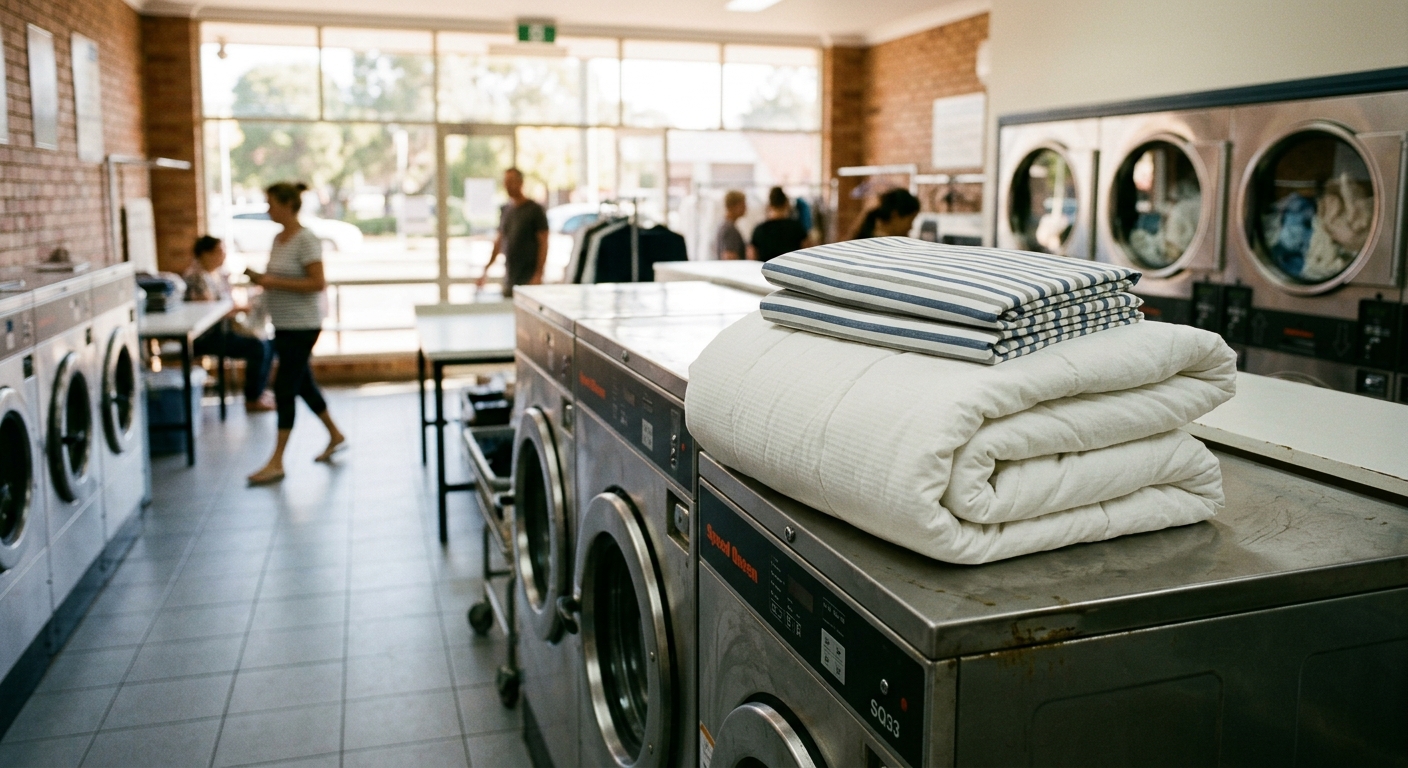
Commercial front-loaders at a self-serve laundromat are a completely different piece of equipment. Machines sized at 14kg, 18kg, or even 25kg give bulky items genuine room to move. The drum rotation actually works as it should — the bedding tumbles freely, water and detergent penetrate the fill evenly, and the high-speed spin extracts far more moisture before the load even goes near a dryer. The result is a cleaner, fresher wash with a much shorter drying time.
Choosing the Right Machine Size
This is the step most people skip, and it makes a big difference. A good rule of thumb is to fill the drum about three-quarters full — enough that the load has room to move, but enough items that the machine isn't running mostly empty either.
For a single doona (queen or king size), a 14kg machine is usually your starting point. If you're adding pillows — say, two to four standard pillows — step up to an 18kg machine. If you're doing a full bedding refresh, meaning the doona, all the pillows, a mattress protector, and maybe a couple of pillow protectors, use the largest machine available. It's not extravagant — it's just the right tool for the job.
When in doubt, go bigger. An oversized machine with a slightly smaller load will always outperform an undersized machine that's been crammed full.
Water Temperature: What to Use for Different Fill Materials
Not all doonas and pillows are made the same, and the fill material matters when you're choosing a wash temperature.
Synthetic fills (microfibre, polyester fibrefill) are the most forgiving. A warm wash — around 40 degrees Celsius — is ideal. It's warm enough to clean thoroughly and kill dust mites, without any risk of damaging the fibres or causing the fill to clump.
Wool and wool-blend fills need a cooler, gentler approach. Use a cold or wool-specific cycle, and make sure you're selecting a low spin speed. Wool can felt and shrink with heat or aggressive agitation, so treat it carefully. Check the care label first — it'll tell you exactly what the manufacturer recommends.
Down and feather fills are also best washed on a warm, gentle cycle, around 30 to 40 degrees. Down is delicate, and high heat can damage the natural oils that give it its loft and insulating properties. Use a small amount of a mild detergent — less than you think you need — and avoid fabric softener entirely, as it can coat the down and reduce its effectiveness.
For pillows, the same rules apply based on fill type. Memory foam pillows cannot go in a washing machine at all — spot clean only. Everything else can generally be machine washed, though again, always check the care label.
Drying Bedding Properly: The Step You Can't Rush
This is where a lot of people go wrong, even when the wash itself has gone well. Bedding — especially anything with a thick fill — needs time and heat to dry all the way through. If there's any moisture remaining in the centre of a pillow or doona, mould can develop within 24 to 48 hours. It won't always be visible straight away, but you'll notice the smell.
How to Wash Your Doona and Pillows at a Laundromat (And Actually Get It Right)
Check this deal out!
The commercial dryers at a self-serve laundromat run hotter and more powerfully than a standard home dryer, which makes a genuine difference with bulky items. For doonas and pillows, plan for at least 40 to 60 minutes in a large dryer on a medium-to-high heat setting. Synthetic fills can handle more heat; wool and down need a lower, longer cycle.
Here's a useful trick: add a couple of clean tennis balls or wool dryer balls to the drum. As the load tumbles, they help break up clumps in the fill and encourage even drying. It sounds odd, but it genuinely works — your doona will come out far fluffier and more evenly dried than without them.
Pause the dryer partway through and pull the load out to shake it and redistribute the fill. Check that the centre of pillows and the corners of the doona are drying evenly. If anything still feels cool or damp, keep going. It's always worth spending an extra ten minutes in the dryer rather than taking bedding home that isn't fully dry.
Making It a Simple, Stress-Free Chore
Once you know what you're doing, washing a doona at a laundromat is genuinely one of the more satisfying laundry jobs. There's something very good about taking something large and well-used and bringing it back to fresh and clean in a couple of hours — without wrestling your home machine or waiting days for everything to air dry.
At The Self Serve Laundry Co, the machines are large-capacity, well-maintained, and easy to use, with clear instructions on-site if you're not sure where to start. Whether you're a renter without in-home laundry, a family doing a seasonal bedding refresh, or a traveller needing to sort out accommodation bedding, you'll find everything you need to get the job done properly.
Come in with your doona and pillows, follow the steps above, and leave with bedding that feels genuinely fresh — not just washed, but properly clean and fully dry. Find your nearest The Self Serve Laundry Co location and make it your next laundry day stop.
Look into Self Serve's latest offers and save!