
Your Complete Guide to Using a Laundromat (And Actually Enjoying It)
Let's be honest — laundromat visits have a bit of an undeserved reputation. People imagine sitting under flickering lights, feeding coins into temperamental machines, waiting forever. But the reality, especially at a good self-serve laundry, is quite different. With a little know-how, a trip to the laundromat can actually be one of the more satisfying errands you run all week. Everything clean, all at once, done in under an hour. Here's how to make it work for you.
What to Bring With You
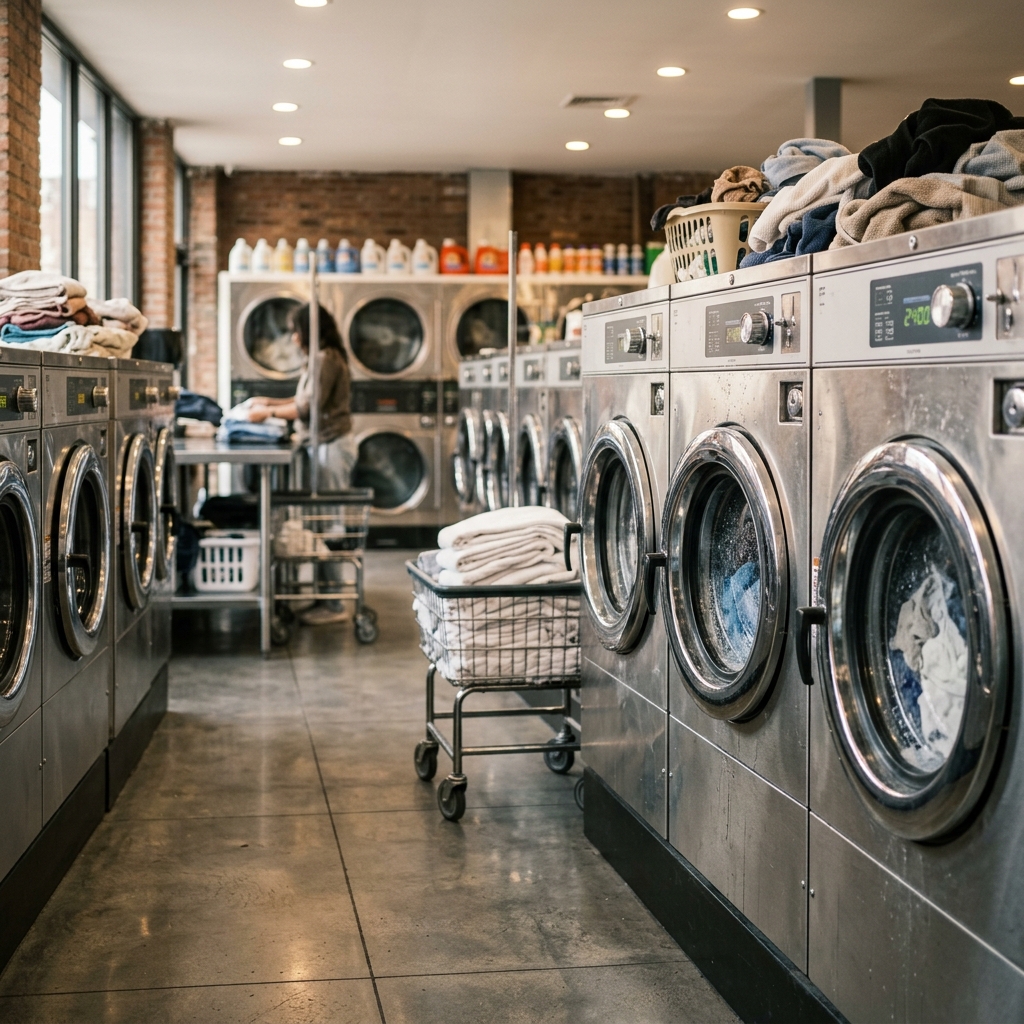
A little preparation goes a long way. Before you head out, grab your laundry sorted into bags — darks, lights, and anything delicate if you're being thorough. Bring your own detergent if you have a favourite, though most laundromats including ours have detergent available if you forget. A good book, podcast, or something to watch on your phone makes the wait genuinely pleasant. And check whether the laundromat uses coins, a card system, or an app — it varies, and you don't want to be caught short.
How Much Does It Cost?
This is one of the most common questions people have, and it's a fair one. Prices vary depending on machine size and location, but generally speaking you're looking at a few dollars for a standard wash cycle, with larger capacity machines costing a bit more. Dryers are usually charged separately, often by time. The real value of a laundromat is that you can wash a massive load — think doonas, bedding, bulky work gear — in one go, which would take several cycles in a home machine. When you factor that in, it's genuinely cost-effective.
Choosing the Right Machine
Most laundromats have a range of machine sizes, and picking the right one matters. For a standard week's worth of clothes for one or two people, a regular front-loader does the job perfectly. If you're washing bedding, a doona, towels for the whole family, or a fortnight's worth of clothes, go for a larger capacity drum. Overstuffing a small machine means your clothes won't get properly clean and the machine has to work harder — it's not worth the saving.
For delicates and woolens, check the machine settings before you start. Most modern laundromat machines have a gentle or delicate cycle, and cold water options, so you don't have to stick everything through a hot wash. If something is truly hand-wash only, it's worth respecting that label.
Wash Settings Simplified
If you're not sure what settings to use, here's a simple rule of thumb. Cold water is safe for most everyday clothes — it's gentler on fabrics and better for the environment. Warm water suits things like towels and moderately soiled items. Hot water is best reserved for things like bedding, heavily soiled work clothes, or anything that really needs a deep clean.
For detergent, use less than you think you need. Laundromat machines are high-efficiency front-loaders, which means they use less water than older top-loaders. Too much detergent creates excess suds, which can actually leave residue on your clothes rather than washing it away.
Drying Without Ruining Your Clothes
The dryer is where a lot of people make mistakes, and it usually comes down to heat. High heat is fine for towels, cotton, and bedding. But anything stretchy, synthetic, or with a bit of structure — think activewear, bras, dress shirts — should go on a lower heat setting or be air-dried at home. Most laundromats have both high and low heat options, so take thirty seconds to sort your load before you start.
Shake out each item before it goes in the dryer. It sounds simple, but untangling clothes means they dry more evenly and come out less wrinkled. A full dryer cycle is usually around 30 to 40 minutes for a standard load, though denser items like jeans and thick towels might need a bit longer.
Laundromat Etiquette (The Unwritten Rules)
Every regular laundromat user knows these, even if nobody talks about them. Don't leave your washing sitting in a finished machine — other people are waiting. If you need to step out, set a timer on your phone so you're back before your cycle ends. Keep your detergent and belongings to your own space rather than spreading across multiple machines. And if someone's left their washing in a finished dryer and you genuinely need it, it's generally fine to move it carefully to a basket or the top of the machine — just treat it as you'd want yours treated.
When Is the Best Time to Go?
Weekend mornings tend to be the busiest time at most laundromats — everyone's trying to knock out their chores at once. If you can go mid-week, or later in the evening, you'll often have the place more to yourself and won't have to wait for machines. It's one of those small scheduling wins that makes a real difference to how the whole errand feels.
Who Gets the Most Out of a Laundromat?
Add your title here
This is a paragraph. Writing in paragraphs lets visitors find what they are looking for quickly and easily. Make sure the title suits the content of this text.

City skyline
Photo By: John Doe

Birthday Sparks
Photo By: John Doe
Fashion Magazine
Photo By: John Doe

Blurred Lines
Photo by: John Doe
Contact Us Amy Time
Thank you for contacting us. We will get back to you as soon as possible.
Oops, there was an error sending your message. Please try again later.