
How to Wash Your Winter Bedding and Bulky Items Without Wrecking Them
Winter has a way of arriving all at once in the Hunter Valley. One week you're fine with a light blanket, and the next you're hauling out the doona, the electric blanket cover, the fleecy throws, and the heavy dressing gowns. Suddenly you've got a pile of bulky, important items that genuinely need a wash — and a home machine that's looking at you like it's already tired.
If you're renting, living in an apartment, or sharing a laundry with other residents, the problem gets even bigger. A standard 7kg or 8kg top-loader simply doesn't have the drum space to wash a queen-size doona properly. And trying to force it in anyway can actually do more harm than good — to both your bedding and your machine.
This guide is here to help you work out what's safe to wash, how to wash it, and why a commercial laundromat might be the easiest, smartest solution you haven't tried yet.
What Can You Actually Machine Wash?
The good news is that most of your winter staples are perfectly safe to machine wash — as long as you've got the right size drum and the right settings. Here's a quick rundown.
Doonas and duvets: Most modern doonas with synthetic fill (polyester fibre) can be machine washed. Down or feather-filled doonas can also be washed in a machine, but they need extra care — a gentle cycle, cool to warm water, and plenty of room to move. If your doona is squashed tightly into the drum, it won't wash evenly and the filling can clump together permanently. Always check the care label first.
Fleece blankets and throws: These are generally very washing-machine friendly. A warm cycle (around 40°C) on a gentle or delicate setting works well. Avoid hot water, which can cause pilling and shrinkage.
Winter jackets and puffer coats: Many puffer jackets — both down-filled and synthetic — are machine washable. Use a gentle cycle, cool water, and a small amount of detergent. Adding a couple of clean tennis balls to the drum can help redistribute the filling as it washes. Again, check the label — if it says dry clean only, trust it.
Heavy cotton and wool items: Wool is the one that trips people up most often. Standard wool garments should be washed on a dedicated wool or delicate cycle with cold water and a wool-specific detergent. Never wring or tumble dry on high heat. Heavy cotton items like blankets or chunky knit throws are generally more forgiving — a 40°C gentle cycle is usually fine.
Electric blanket covers: If your electric blanket has a removable cover, check whether it's machine washable. Many are, on a gentle cold cycle. Never wash the electric blanket itself unless the manufacturer specifically says it's safe.
What Temperature and Cycle Should You Use?
This is where a lot of people either overthink it or don't think about it enough. Here's a simple guide.
Cold water (under 30°C): Best for delicate fabrics, wool, and anything that might shrink or lose its shape. Also the right choice for lightly soiled items where you just want a freshen up.
Warm water (30–40°C): A good all-rounder for most winter items — fleece, cotton blankets, synthetic-fill doonas. Warm water cleans more effectively than cold without the shrinkage risk that comes with hot.
Hot water (60°C and above): Generally best left for things like towels, sheets, and heavily soiled cotton items. Not recommended for most winter bedding or delicate fills.
For cycles, gentle or delicate is your safest default for anything bulky or filled. It's a slower, lower-agitation wash that's much kinder on fibres and stitching. A standard or heavy-duty cycle can work for cotton blankets and less delicate items, but if you're ever unsure, gentle is the better choice.
Always add less detergent than you think you need. Too much soap in a large, bulky load creates excess suds that are hard to rinse out properly — especially in a big drum — and leftover detergent residue in bedding can irritate skin.
Why Your Home Machine Might Not Be Up to It
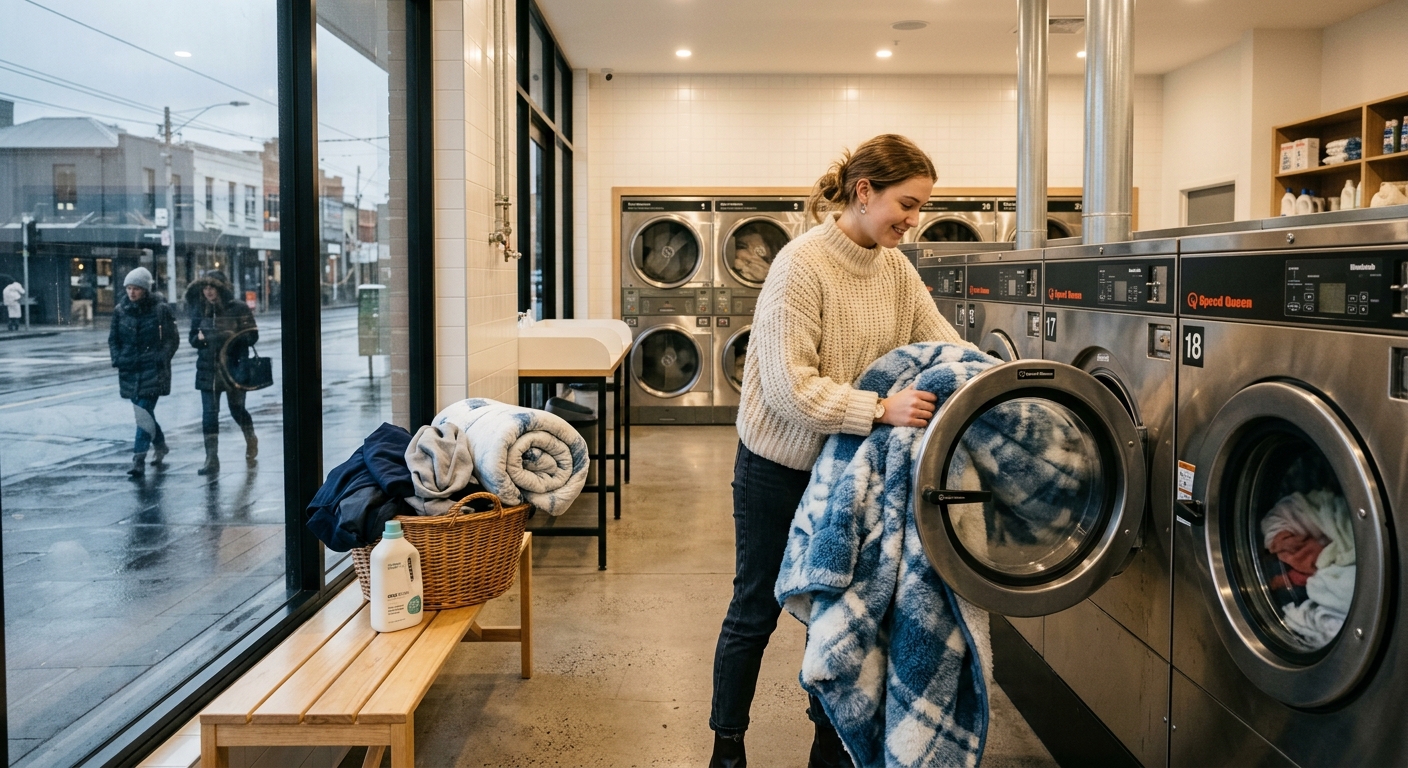
Let's be honest about what a standard home washing machine can and can't do. Most home machines have a drum capacity of around 7–9kg. That sounds like a lot until you try to fit a queen-size doona inside one. A wet, compressed doona that can't move freely around the drum won't get properly clean — the water and detergent just can't circulate through the filling.
Worse, a machine that's overloaded has to work harder than it's designed to. Over time, that puts strain on the motor and drum bearings. If you're renting, you don't want to be the reason the shared laundry machine breaks down.
There's also the drying problem. Large winter items need a long, thorough dry to prevent mildew and musty smells — particularly down-filled items, which can hold moisture deep inside the filling. Most home dryers are too small to do this efficiently.
Add your title here
This is a paragraph. Writing in paragraphs lets visitors find what they are looking for quickly and easily. Make sure the title suits the content of this text.

City skyline
Photo By: John Doe

Birthday Sparks
Photo By: John Doe

Fashion Magazine
Photo By: John Doe

Blurred Lines
Photo by: John Doe
Contact Us Amy Time
Thank you for contacting us. We will get back to you as soon as possible.
Oops, there was an error sending your message. Please try again later.