
Why Winter Is Actually the Best Time to Tackle Your Activewear Backlog
Let's be honest. When it's cold outside and motivation is low, the basket of sweaty activewear in the corner of the bedroom has a way of growing into something you'd rather not think about. Synthetic fabrics, compression tights, footy jerseys, training shorts - they all trap odour in a way that cotton never quite manages, and a standard home washing machine often just doesn't have the capacity, or the grunt, to deal with a big build-up of the stuff.
Here's the thing though. Warmer weather is on its way, and when it arrives you're going to want to be back out there running, training, playing - not discovering that your favourite kit still smells like last August. Getting on top of it now, before the rush of spring sport kicks in, is one of those small wins that genuinely makes life easier.
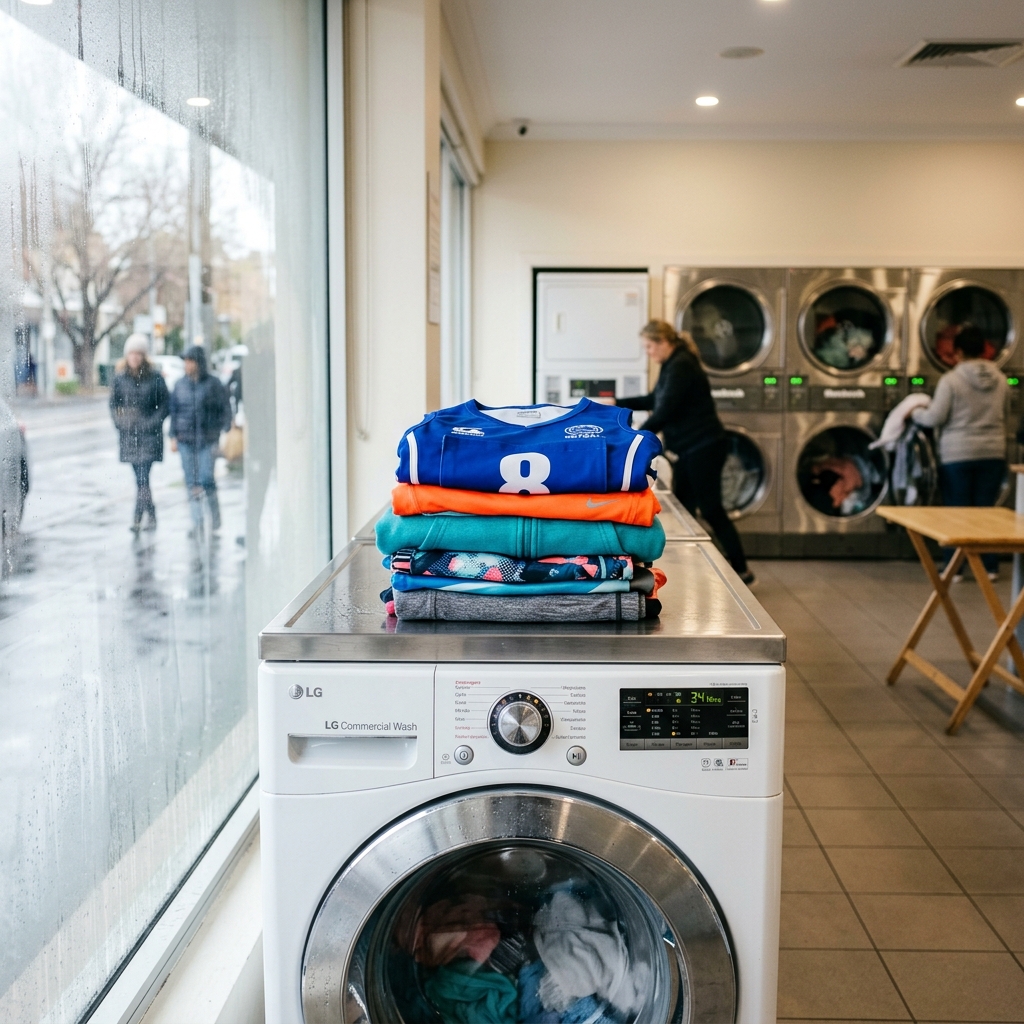
The large-capacity machines at The Self Serve Laundry Co are built for exactly this kind of load. Where a standard home machine might top out at six or seven kilograms, our commercial washers handle significantly larger loads in a single cycle. That means you can wash a full footy kit, a week's worth of gym gear, and a handful of compression pieces all at once, rather than splitting things across three or four separate home washes spread across as many days.
Synthetic performance fabrics - think polyester, spandex blends, and moisture-wicking materials - have a reputation for holding onto odour even after washing. That's not your imagination. These materials trap bacteria in tiny fibres, and a lukewarm home wash with a standard detergent often isn't enough to break that down properly. The combination of low water volume, insufficient agitation, and the wrong wash settings means clothes come out smelling almost clean, but not quite. A few hours later, that familiar gym smell is back.
Water temperature matters here. For most activewear, a cool to warm wash sits around 30 to 40 degrees Celsius. Hotter than that and you risk damaging the elasticity and moisture-wicking properties that make performance gear worth wearing in the first place. Our machines give you proper control over temperature settings, so you can choose the right cycle for the fabric rather than just guessing and hoping for the best.
Detergent choice is worth thinking about too. Regular laundry powder or liquid works fine for most everyday washing, but activewear responds better to a detergent that's designed to tackle bacteria and synthetic fibres specifically. Sport-specific detergents are worth the small extra cost, particularly for items you wear repeatedly through intense exercise. If you're not using one of those, a standard liquid detergent tends to rinse out more cleanly than powder in lower temperatures, which helps. Avoid fabric softener on activewear entirely. It coats the fibres, reduces breathability, and actually locks in odour over time rather than removing it.
For heavily soiled kit, a soak before washing makes a real difference. You don't need anything fancy. A basin of cool water with a small amount of white vinegar or a sport wash pre-soak product, left for 15 to 30 minutes before loading the machine, helps break down the bacteria that cause odour before the wash cycle even begins. It's an extra step, but for gear that's been through a winter's worth of training, it's genuinely worth doing.
Drying is where a lot of people undo their good work. High heat is the enemy of synthetic activewear. Tumble drying on a hot setting will degrade elastic waistbands, warp the structure of compression pieces, and shorten the life of moisture-wicking fabrics noticeably. Our dryers give you the option to run a lower heat or air dry cycle, which takes a little longer but keeps your gear in better shape across the long run. For delicate items, draping them over the folding tables to air dry the rest of the way after a short, low-heat tumble is a perfectly reasonable approach.
One of the underrated benefits of doing a big activewear wash at a laundromat is simply that you can do it all in one go and be done. Load everything into one or two large machines, set the right cycle, and while it runs you can sit, have a coffee, scroll your phone, or get something else ticked off the to-do list. No splitting loads over multiple nights, no waiting for the machine to be free, no cramming things in that don't quite fit.
For families with kids in winter sport, this is especially useful. Footy jumpers, socks, training shorts, mouthguard bags, the spare layer they wore on the bench - it all adds up, and doing it weekly as part of a single laundromat trip is a lot less stressful than the alternative.
Add your title here
This is a paragraph. Writing in paragraphs lets visitors find what they are looking for quickly and easily. Make sure the title suits the content of this text.

City skyline
Photo By: John Doe

Birthday Sparks
Photo By: John Doe

Fashion Magazine
Photo By: John Doe

Blurred Lines
Photo by: John Doe
Contact Us Amy Time
Thank you for contacting us. We will get back to you as soon as possible.
Oops, there was an error sending your message. Please try again later.